Discover your future in Australia's gold industry. Explore diverse career paths and start your journey today.

Job Profiles
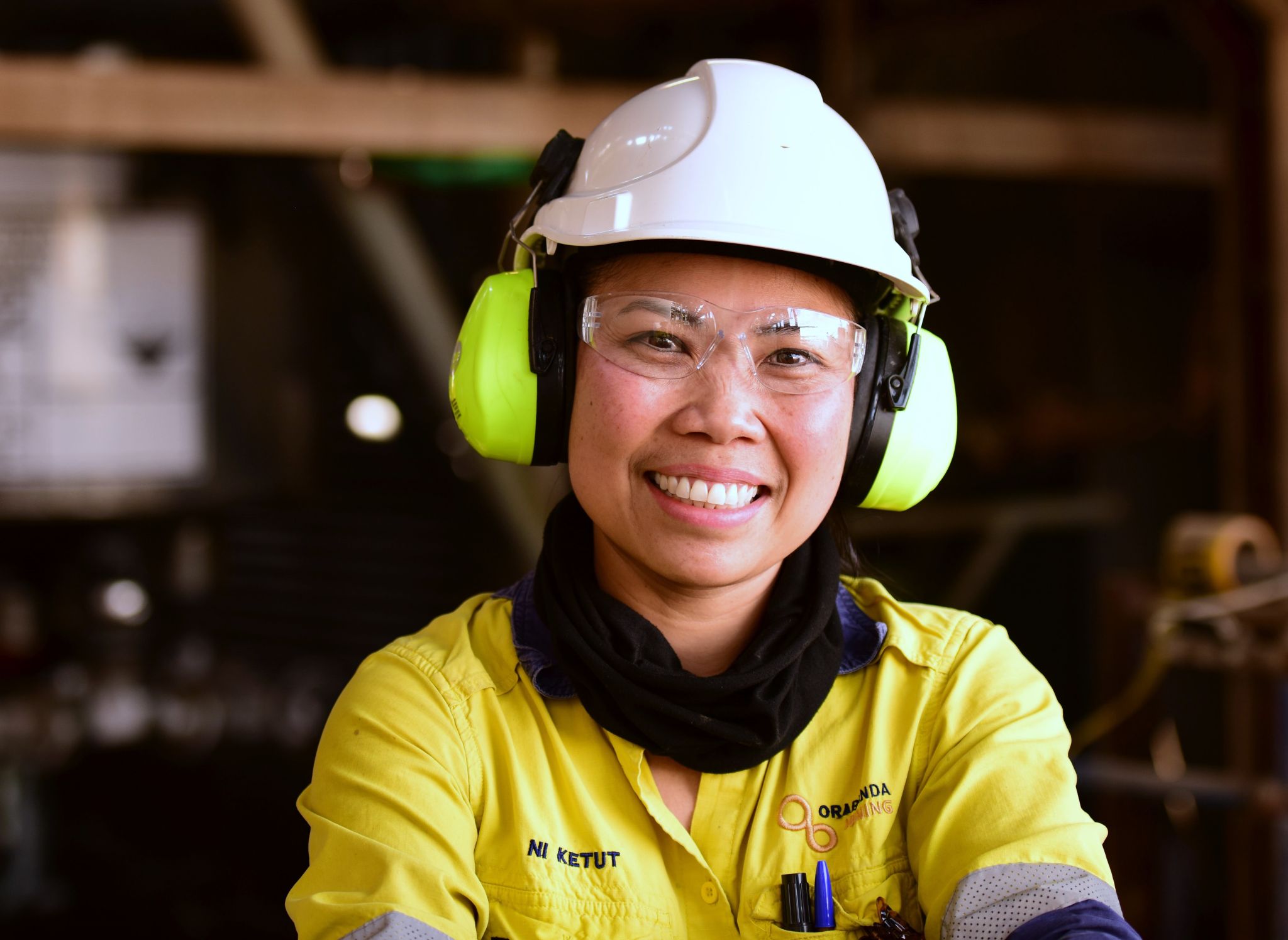

Role: Mining Engineers plan and oversee the engineering aspects of locating and extracting minerals from the earth.
You’ll conduct surveys to assess mineral deposits, determine the feasibility of extraction, and design the extraction process. Your tasks will include estimating project costs, planning production schedules, deciding drilling locations, ensuring safety protocols, and performing risk assessments. Day-to-day activities involve data analysis, providing expert advice, conducting research, and problem-solving.
Education Pathways:
To become a Mining Engineer, you’ll need a Bachelor’s Degree in Engineering, specializing in mining or geotechnical engineering. Postgraduate studies are beneficial but not always required.
Mining Engineer
INFO & PATHWAYS ^

Role: Surveyors map, measure, and analyse land, features, and underground works, providing essential data for a wide range of industries.
Surveyors conduct precise measurements, develop land information systems, and advise on technical requirements for projects. They compile and evaluate data, interpret codes of practice, and write reports on land use, tenure, and survey measurements. Mine surveyors specifically focus on accurate measurement and recording of mine workings, which are crucial for the safety and planning of mining operations.
Education Pathways:
To become a surveyor, you will need a Bachelor’s Degree in Surveying, Spatial Science, or a related field.
Surveyors
INFO & PATHWAYS ^

Role: Mechanical Engineers are responsible for planning, designing, and overseeing the assembly, operation, and maintenance of mechanical and process plants
You’ll design and develop mechanical equipment, machines, and systems, as well as manage project labour, materials, and equipment. Your tasks will include setting standards for installation and quality control, inspecting plants for optimal performance, and coordinating new designs, surveys, and maintenance schedules
Education Pathways:
To become a Mechanical Engineer, you’ll need a Bachelor’s Degree in Engineering with a focus on Mechanical Engineering. While postgraduate studies can be beneficial, they aren’t always required.
Mechanical Engineer
INFO & PATHWAYS ^

Role: Drillers work closely with Health and Safety teams and Geologists to assemble, position and operate drilling rigs and related equipment for mineral exploration and production.
If you’re into hands-on work and like working with machinery, drilling could be for you. You’ll be using tools and heavy equipment, operating drilling rigs, taking ore samples, and keeping track of everything that happens on the job.
Education Pathways:
To secure work as a Driller, you need to have some high school education, with a diploma or the following certifications.
- Certificate II in Drilling Operations
- Certificate III in Drilling Operations
- Certificate IV in Drilling Operations
Driller
INFO & PATHWAYS ^

Role: Offsiders play a key role in helping drillers by moving, setting up, and operating drill rigs and other equipment needed for mineral exploration and production.
You’ll perform pre-start checks on vehicles and downhole equipment, assist with rig checks, and keep equipment in top shape. You’ll also manage stock levels, follow safety practices, spot potential hazards, and communicate with the driller or supervisor.
Education Pathways:
To secure work as a Offsider you need to have a drivers license and some high school education. Experience will be regarded, however not usually required as on the job training is generally provided.
Offsider
INFO & PATHWAYS ^

Role: Shot Firers are responsible for positioning and detonating explosives at mine sites, ensuring the process is conducted safely and efficiently.
You’ll position explosives in boreholes, connect wires, fuses, and detonating cords, and prime explosives for detonation. Problem-solving is a big part of the job, as you’ll handle and move objects, stay updated with technology, and monitor safety regulations to ensure everything runs smoothly
Education Pathways:
While formal qualifications aren’t mandatory, a VET course in a relevant mining field and at least one year of experience can give you an edge in securing a role as a Shot Firer.
Shot Firer
INFO & PATHWAYS ^

Role: Also known as Field Service Workers, Geology Technicians collect and test earth and water samples, record observations, and analyse data to support Geologists or Geophysicists.
Geology Technicians prepare materials for experiments, gather samples, conduct field and lab tests, and analyse data. They are essential in exploration projects, working with geologists to assess the viability of gold deposits, whether near a mine or on remote sites.
Education Pathways:
Some companies may require experience or formal qualifications in areas like Environmental Technology or Laboratory Technology. Vocational Education and Training (VET) is a common pathway, and while a university degree is respected, it may not always be necessary.
Geology Technician
INFO & PATHWAYS ^

Role: Geologists study the composition, structure, and physical attributes of the earth to advance scientific knowledge and apply it to areas like mineral exploration, environmental protection, and land rehabilitation after mining.
Geologists conduct mineral deposit surveys, supervise laboratory reports, and study the earth’s structure and formation. They analyse data, research developments, and help teams interpret geological information while staying updated on technology.
Education Pathways:
To work as a Geologist, you need a Bachelor’s Degree in Science, majoring in Geology or a related field. While postgraduate studies are not required, they are highly regarded.
Geologist
INFO & PATHWAYS ^

Role: Geotechnical Engineers study how geological formations affect construction projects. They design foundations for structures and analyse soil and rock behaviour under pressure.
Geotechnical Engineers manage projects, collect and analyse data, and provide expert advice to teams. They test soil and rock samples to determine their strength and safe load capacity for supporting structures.
Education Pathways:
A Bachelor’s Degree in Engineering, with a focus on Civil or Geotechnical Engineering, is required. Postgraduate studies are also common and highly regarded.
Geotechnical Engineer
INFO & PATHWAYS ^

Role: Environmental Officers analyse and advise on environmental policies for government and commercial projects. They collaborate with Conservation Officers, sustainability teams, local communities, and traditional landowners
They conduct environmental impact assessments, propose solutions for negative impacts, and study the effects of various factors like climate change, human activity, and natural conditions on ecosystems. Common tasks include pollution analysis, conservation planning, and identifying culturally significant plants, animals, and items..
Education Pathways:
A Bachelor’s Degree in Environmental Science, Natural Resource Management, Conservation, or a related field is required.
Environmental Officer
INFO & PATHWAYS ^

Role: Offsiders play a key role in helping drillers by moving, setting up, and operating drill rigs and other equipment needed for mineral exploration and production.
You’ll perform pre-start checks on vehicles and downhole equipment, assist with rig checks, and keep equipment in top shape. You’ll also manage stock levels, follow safety practices, spot potential hazards, and communicate with the driller or supervisor.
Education Pathways:
To secure work as a Offsider you need to have a drivers license and some high school education. Experience will be regarded, however not usually required as on the job training is generally provided.
Offsider
INFO & PATHWAYS ^

Role: Shot Firers are responsible for positioning and detonating explosives at mine sites, ensuring the process is conducted safely and efficiently.
You’ll position explosives in boreholes, connect wires, fuses, and detonating cords, and prime explosives for detonation. Problem-solving is a big part of the job, as you’ll handle and move objects, stay updated with technology, and monitor safety regulations to ensure everything runs smoothly
Education Pathways:
While formal qualifications aren’t mandatory, a VET course in a relevant mining field and at least one year of experience can give you an edge in securing a role as a Shot Firer.
Shot Firer
INFO & PATHWAYS ^
Job Spotlight
Senior Planning Engineer Full Time
Geologist – Operations Full Time
Geotechnical Engineer Full Time
Senior Geologist – Discovery Full Time
Projects Superintendent Full Time
Mine Surveyor Full Time
Geotechnical Superintendent Full Time
Project Geologist – Operations Full Time
Technical Services Superintendent Full Time
Senior Mining Engineer Full Time
Project Geologist – Growth Full Time
Geologist – Operations Full Time
Senior Mining Engineer Full Time
Mining Engineer Full Time
Senior Geotechnical Engineer Full Time
Alternate Underground Manager Full Time
Mining Engineer Full Time
Geologist – Growth Full Time
Project Geologist – Discovery Full Time
Key Resources
Study, Skills & Training
There are many tertiary-level qualifications available for study across Australia, in disciplines directly related to the mining industry. Relevant university courses can include engineering (mining, metallurgical, chemical), exploration geophysics, mineral and energy economics, and more.
Browse the below options to get started:
Western Australia
- Curtin University – WA School of Mines: Minerals, Energy and Chemical Engineering
- University of Western Australia – School of Engineering
New South Wales
- University of New South Wales – School of Minerals and Energy Resources Engineering
- University of Wollongong – School of Civil, Mining and Environmental Engineering
South Australia
Queensland
Alternatively, complete a TAFE certification or vocational education qualification through private institutions to begin your career in gold. These can include but are not limited to engineering, exploration, laboratory technology, civil construction, surveying and more.
Discover the various options for Certificate’s I, II, III IV and Diplomas at the below institutions: